
Why are all proteins left-handed?

Picture of Patrick Wang

Patrick Wang

Expert of Peptides | Ask me anything about Peptides | Sales Manager at AHB Lab
Cover

Table of Contents

The Enigmatic Bias in the Building Blocks of Life

The foundation of life exhibits a fascinating bias that puzzles scientists: almost all proteins are made of amino acids that are “left-handed.” This preference exists despite both mirror-image forms of amino acids, resembling left and right-handed gloves, being theoretically equally prevalent in the early days of Earth. The prevailing question has been: what influenced the primordial world to favor left-handed amino acids, setting a precedent that has been maintained throughout the evolution of life?

protein


A Novel Explanation from Recent Research

A breakthrough study conducted by a team of U.S. researchers offers a compelling explanation for this bias. Published in the prestigious journal Nature, their research meticulously analyzed the formation rates of amino acid pairs, known as dipeptides, revealing mechanisms that preferentially promote dipeptides composed of amino acids with matching handedness. This discovery could potentially extend to explain the uniform orientation in larger molecules like proteins, and intriguingly, the opposite bias observed in RNA and DNA molecules, which predominantly consist of right-handed sugars.

Insights from Experiments and Theories

The quest to understand life’s chirality, or directional bias, has led to various theories over the years. Some speculate that life’s building blocks may have been influenced by external forces, such as polarized light from space or Earth’s magnetic fields. However, these theories lacked a mechanism for perpetuating the initial bias.

Recent advancements by Matthew Powner and his team at University College London have shed light on this mystery. They explored sulfur-based molecules, likely present on early Earth, that facilitate the formation of dipeptides in water. This process, compatible with all amino acids found in living organisms, presents a plausible pathway for the initial protein formation.

Building on this foundation, Donna Blackmond’s team at Scripps Research took the investigation further. They discovered that certain sulfur compounds, when acting as catalysts, showed a preference in forming dipeptides with mixed chirality. Initially, this seemed to complicate the understanding of life’s chirality. However, deeper analysis revealed a domino effect: a slight initial bias towards one form of amino acids could lead to a significant predominance of homochiral (same-handed) dipeptides.

The Domino Effect and Its Implications

The process unfolds as heterochiral (mixed-handed) dipeptides form more rapidly, gradually leading to a surplus of the initially more abundant form of amino acids. This imbalance increases the likelihood of forming homochiral dipeptides. Moreover, the researchers observed that heterochiral dipeptides tend to precipitate out of solution faster than their homochiral counterparts, further skewing the balance towards a single chirality based on the initial mix.

This mechanism, though demonstrated with dipeptides, suggests a broader principle that could apply to the formation of longer peptide chains and potentially to the chirality observed in genetic molecules like RNA.


Toward a Unified Theory of Life’s Chirality

The implications of this research extend beyond the molecular level, potentially offering insights into one of the fundamental aspects of life’s origin. The “left-handedness” of amino acids and the opposite bias in the sugars of RNA and DNA might stem from similar statistical and chemical biases, a hypothesis that future research will continue to explore.

This groundbreaking study not only advances our understanding of life’s molecular asymmetry but also opens new avenues for investigating the origin of life on Earth. As researchers delve deeper into the mechanisms behind life’s chirality, the mystery of why life prefers one handedness over the other becomes less enigmatic, bringing us closer to understanding the very essence of our existence.
 

Understanding Peptide Structure: Orientation, Bonds, and Biological Function

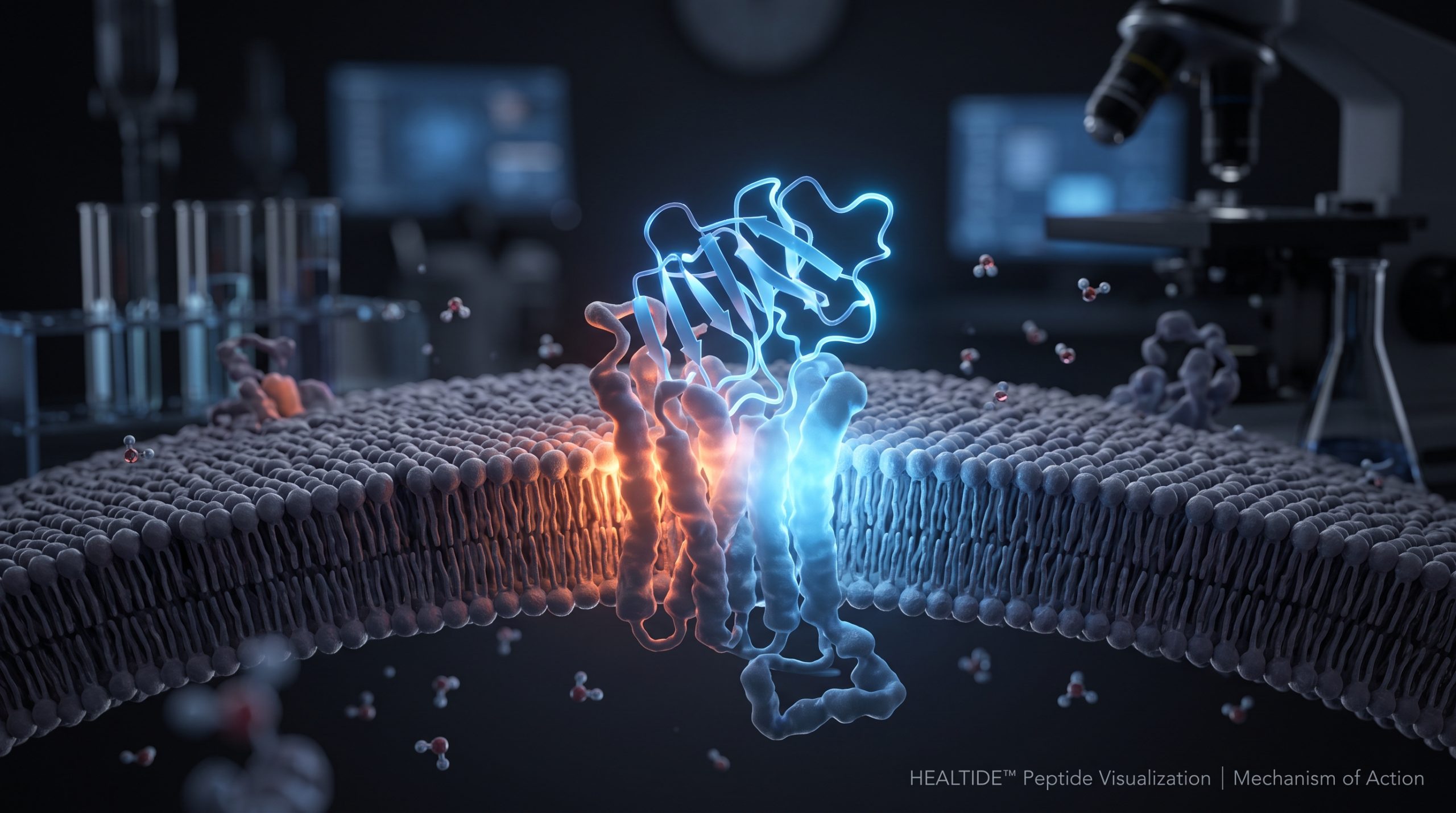
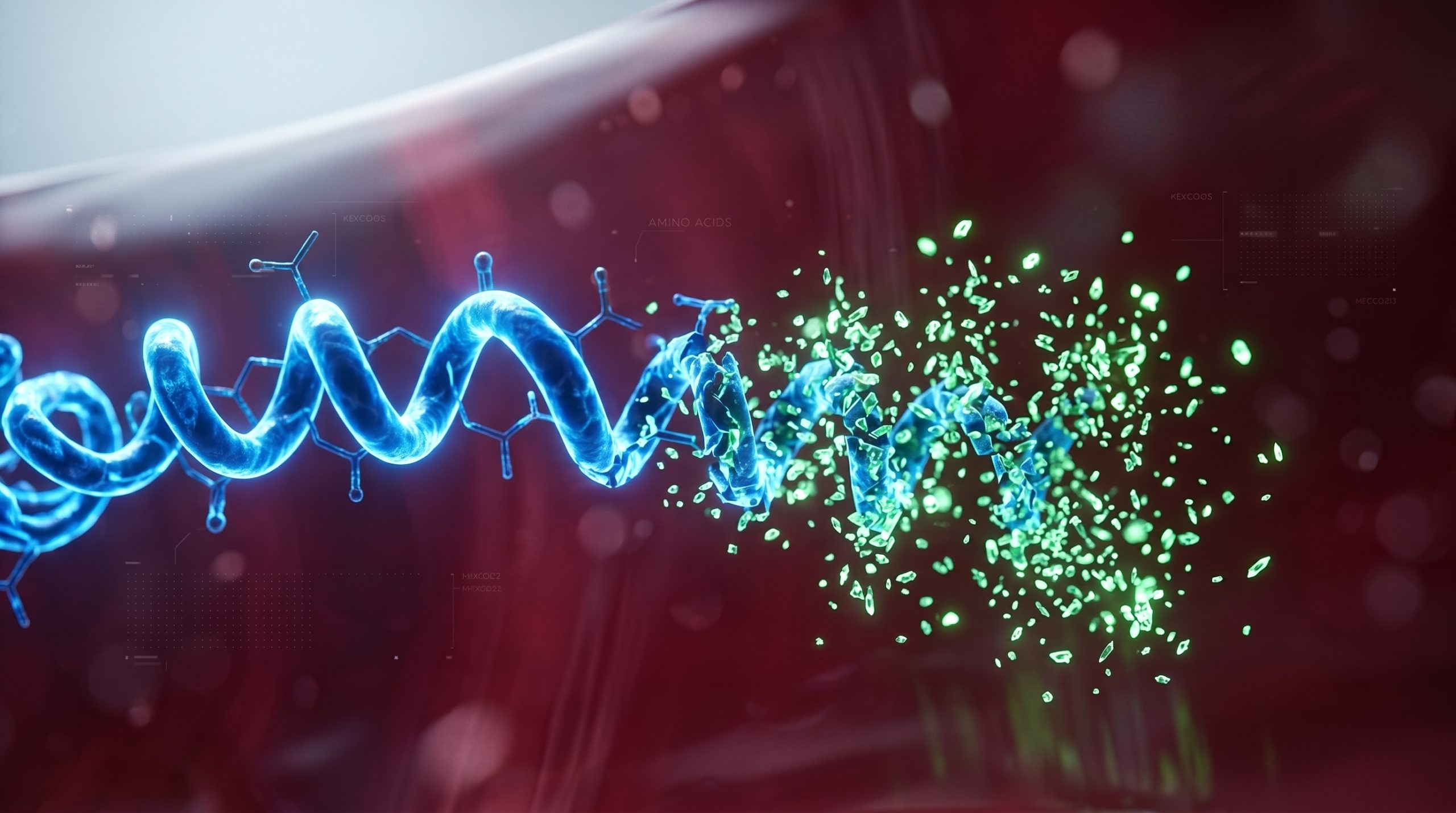
The structure of a peptide is a critical aspect of its function and biological activity, intricately determined by the sequence and orientation of its amino acids. Peptides are formed through the dehydration synthesis between the amino group of one amino acid and the carboxyl group of another, creating a covalent bond known as a peptide bond. This process repeats to form long chains of amino acids, which can fold into specific three-dimensional shapes essential for their biological roles. The sequence from the N-terminal (amino group) to the C-terminal (carboxyl group) end not only dictates the peptide’s structure but also influences its ability to interact with other molecules. The physical properties and reactivity of the side chains of the constituent amino acids further contribute to the peptide’s overall shape and function, allowing for a diverse range of biological activities and functions, from signaling to catalytic roles within cells. Understanding the structure of peptides, including their spatial configuration and folding patterns, is fundamental in biochemistry and molecular biology, providing insights into protein function, enzyme activity, and the molecular basis of diseases.

At AHB Lab, we’re not just leaders in peptide synthesis; we’re at the heart of pioneering biotechnology exploration. Our focus goes beyond mastering peptide production to embody a vision that drives innovation across the biotech landscape. We are committed to exploring the depths of peptide structure and function, uncovering the molecular mysteries that hold the key to groundbreaking health solutions. By aligning with the latest in scientific research and technological advancements, AHB Lab is dedicated to spearheading developments that not only enhance our understanding of peptides but also pave the way for revolutionary biotech applications. Join our quest as we forge new paths in science and contribute to shaping the future of biotechnology with our unwavering commitment to excellence and innovation.

Leave a Reply

Your email address will not be published. Required fields are marked *

公司最新訊息

你的消炎藥只是在「關掉煙霧探測器」?從源頭阻斷慢性發炎的胜肽科學

為什麼你的疲倦與疼痛總是反覆發作? 你是不是經常覺得關節痠痛、莫名疲倦,或者有各種過敏和腸胃問題,卻始終找不出確切原因 ? 在現代高壓與快節奏的生活中,許多人都在尋求這些亞健康狀態的解藥。事實上,現代人90%的慢性病,其實都來自同一個源頭:你體內有一把撲不滅的「無名火」,醫學上稱之為「慢性發炎」 。 當面臨這些不適,多數人的第一反應是服用非類固醇消炎藥(NSAIDs)或類固醇。然而,這些傳統藥物往往只能提供短暫的舒緩,一旦停藥,症狀便會捲土重來。這不禁讓我們反思:我們是否只在處理表面症狀,而忽略了真正的問題根源?   傳統消炎藥的盲點與機制 要理解傳統藥物的局限性,我們必須先了解發炎的運作機制。當身體受到外界刺激時,免疫系統中的「巨噬細胞」會釋放 TNF-α 和 IL-1β 等發炎細胞因子 。這本是身體為了防禦而響起的警報器,但當免疫系統失衡,這些發炎因子便會失控形成「細胞因子風暴」,開始無差別攻擊正常細胞、黏膜和關節,甚至破壞 DNA 。 傳統的西藥如 NSAIDs 是如何運作的呢?它們主要的作用機制是抑制下游的 COX-1 或 COX-2 酵素 。 為了讓大家更直觀地理解,我們可以比較一下這兩種機制的差異:

Read More
公司最新訊息

止痛藥的隱形代價:淨火肽如何透過「8小時降解」機制重塑無毒抗炎新標準?

引言 在現代高壓的生活節奏中,面對關節痠痛或慢性疲勞,多數人的第一反應往往是去藥房購買非類固醇消炎止痛藥,或是服用醫生開立的類固醇 。當藥效發揮,疼痛的警報聲停止,我們便誤以為身體恢復了健康 。 然而,你吞下的那顆止痛藥,在讓你感覺不到痛之後,究竟去了哪裡? 這是一個多數消費者忽略,而品牌研發端必須正視的痛點。傳統藥物在體內的作用機制,實際上只是粗暴地抑制了下游的 COX 酵素 。這就像是一群莽漢直接砸爛了火災警報器,卻對真正引發火災的源頭無能為力 。更嚴重的是,這些無法被身體完全辨識與利用的化學合成物,在完成掩蓋任務後並不會憑空消失,而是轉化為化學廢棄物 。 這些殘留物迫使肝臟超負荷運作以進行代謝,同時也讓腎臟拼命處理排毒 。由於 COX 酵素被過度抑制,人體保護胃壁的機制隨之停擺,最終導致腸胃黏膜逐漸受到破壞 。這不是真正的治療,而是一場用內臟健康換取短暫不痛的恐怖交易 。身為保健或保養品牌的決策者,我們必須思考:除了這種「拆東牆補西牆」的化學療法,我們能否為市場提供一種更安全、無毒的解答?   核心機制深潛 為了解決傳統消炎藥物的瓶頸,富比積生物科技(AHB Lab)突破傳統藥理學限制,研發出名為「淨火肽 Healtide®」的第三代生物合成定序胜肽 。這項技術透過「生物黑客」的思維,重新定義了抗炎機制的標準。   1.

Read More
公司最新訊息

你體內的「無名火」正在搞破壞!一招從源頭撲滅慢性發炎(淨火肽 Healtide® 機理大解密)

為什麼吃了消炎藥,身體的「火」還是滅不掉? 你是否經常遇到這樣的客戶反饋:消費者面對關節痠痛、過敏、腸胃不適或皮膚慢性暗沉,長期服用非類固醇消炎藥(NSAIDs)或塗抹類固醇,卻總是反覆發作、治標不治本 ?   現代醫學與功能生物學證實:90% 的慢性疾病與老化瓶頸,核心源頭都來自體內撲不滅的「慢性發炎」。 傳統生技產品或化學藥物的開發邏輯,大多著眼於抑制下游的 COX-1 或 COX-2 酵素 。用一個心智模型(Mental Model)來比喻:這就像火災發生時,你只是跑去「關掉煙霧探測器」,卻根本沒有沒收那個正在不斷點火的「打火機」! 長期下來,不僅無法根除發炎,化學藥物更可能增加肝腎與腸胃道的代謝負擔 。 市場正在尋找一種更高訊噪比、能「從源頭斷火」且安全無副作用的革命性生物素材。這正是富比積生物科技(AHB Lab)董事長莊國昇博士與研發團隊,成功推出第三代生物合成定序胜肽——淨火肽(Healtide®)的契機 。   淨火肽(Healtide®)的源頭阻斷機制 當人體受到刺激時,免疫系統的「巨噬細胞」會釋放 TNF-α(腫瘤壞死因子)與 IL-1β 等發炎細胞因子 。一旦失控,就會引發無差別攻擊正常組織的「細胞因子風暴」

Read More