Practical Uses for Quantum Computers
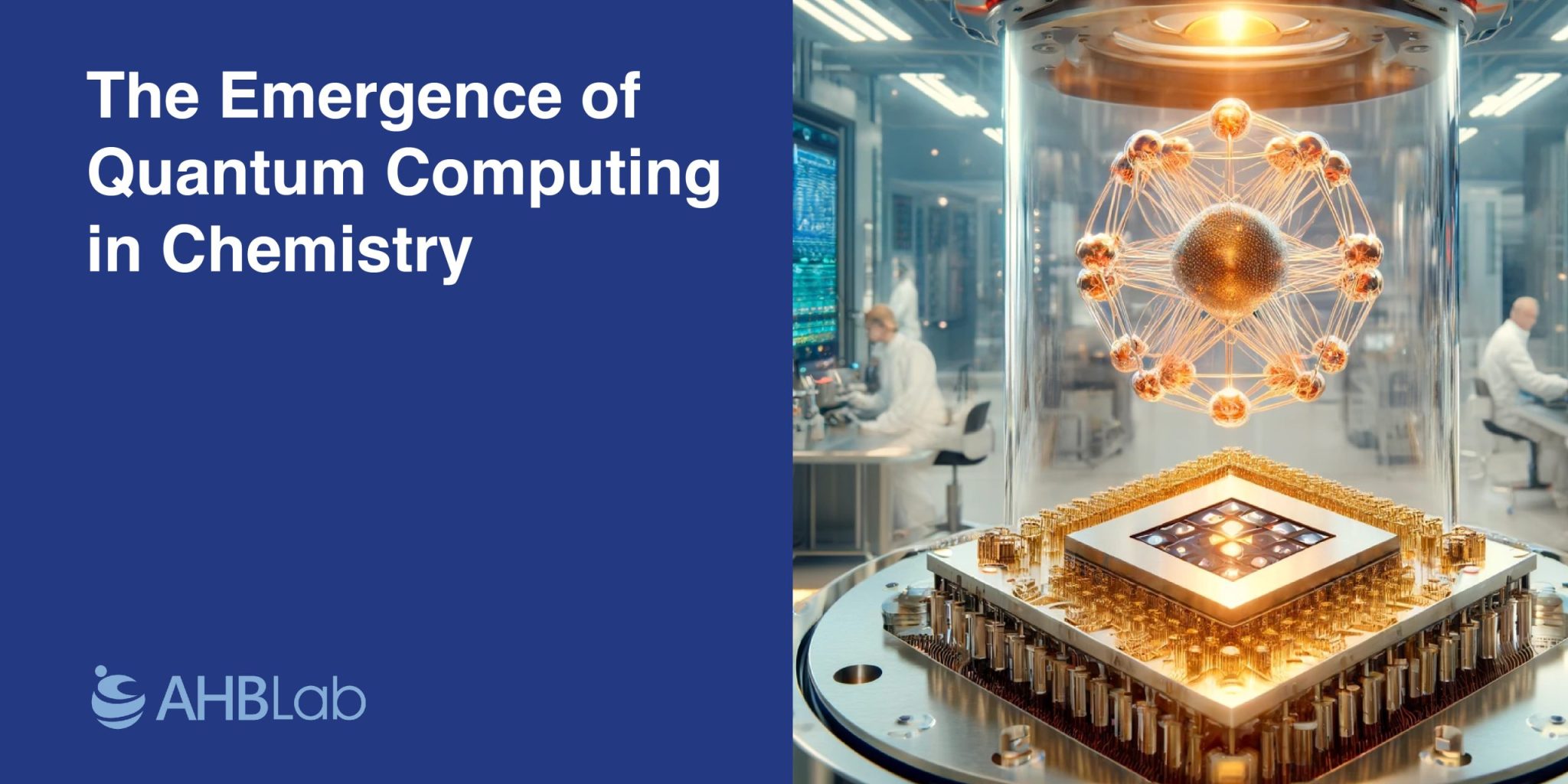
In the rapidly evolving field of quantum computing, practical applications are beginning to surface, particularly in the realm of chemistry. These advancements promise to accelerate the development of new materials, catalysts, and drugs. A visit to Quantinuum in Broomfield, Colorado, reveals a fascinating glimpse into the future of this technology. Here, a quantum computer’s core is a silicon chip, resembling a stamp but far more complex. Encased within a vacuum chamber and cooled nearly to absolute zero, this chip is adorned with 198 gold electrodes, arranged like an oval racetrack.
Above this racetrack, ytterbium ions are levitated and manipulated through a series of electrical, radiofrequency, and laser pulses. These manipulations impart specific amounts of energy to the ions, allowing them to interact and perform a sequence of logical operations. A final burst of laser pulses induces the ions to fluoresce or remain dark—a binary code readout that represents the computation’s solution.
Quantum Computing in Chemistry
Last year, Quantinuum researchers utilized a chip with eight ytterbium ions to compute the precise arrangement of a hydrogen molecule’s two electrons in their most stable state. While a typical laptop can achieve this in seconds, the significance lies in demonstrating advanced quantum simulation, expected to outperform classical methods as quantum computers grow more powerful. This achievement marks a pivotal moment, indicating that quantum computers are transitioning from theoretical potential to tackling real-world challenges.
Quantinuum, among other companies, believes that applications in chemistry, particularly in drug and catalyst discovery, will be among the first practical uses for quantum computers. These machines are uniquely suited for predicting molecular structures and behaviors because both the machines and molecules operate under the principles of quantum mechanics.
Advancing Quantum Computing with Chemistry
According to Chad Edwards, head of strategy at Quantinuum, “We are currently using chemistry problems to advance quantum computing instead of using quantum computing to advance chemistry. But there will be a tipping point.” This sentiment is echoed by Louis-Paul Henry, a quantum physicist at PASQAL, who notes a significant acceleration in the past year, with more people addressing real-world problems using quantum computing.
Quantum computers are already aiding researchers in exploring reaction pathways in fuel cell catalysts, simulating the brief interactions of light and matter, and identifying druggable pockets in proteins. Ashley Montanaro, co-founder of Phasecraft, suggests that today’s quantum computers are nearing the capability to make discoveries beyond classical systems’ reach. “It’s a lot closer than people previously thought,” she asserts.

The Mechanics of Quantum Computers
Unlike standard computers that process bits of data as 0s and 1s, quantum computers use “qubits,” which can encode data as 0, 1, or any combination of the two states in a simultaneous “superposition.” In Quantinuum’s computer, the qubits are the electrons in ytterbium ions, capable of hovering in a superposition of two energy levels. During computation, multiple qubits become “entangled,” allowing their energy states to influence each other and evaluate all possible interactions simultaneously.
Ilyas Khan, founder of Quantinuum, compares classical computation to a mouse navigating a maze through trial and error, while a quantum computer has a bird’s-eye view, identifying the optimal path instantly. Verifying the solution involves testing the molecular structure or behavior revealed by the quantum computer.
Challenges and Progress
Qubits are notoriously fragile; any disturbance can disrupt their superposition state, causing errors. Researchers mitigate these issues by chilling qubits and isolating them from their environment. They also incorporate redundancy, with many qubits dedicated to error correction. Despite these challenges, quantum computers are becoming more powerful. IBM, for instance, recently unveiled a computer with 1121 qubits, up from a 127-qubit version released in 2021. Atom Computing introduced an 1180-qubit computer utilizing the spins of neutral ytterbium atoms.
Accuracy improvements are also underway. In December 2023, Harvard researchers reported a breakthrough with a 280-qubit computer from QuEra, achieving significant error reduction. Last month, Quantinuum scientists enhanced their 32-qubit ion chip with a new Microsoft algorithm that dramatically improved error detection and correction. Prineha Narang, a quantum computing expert at UCLA, believes that these hardware advances could soon expand the range of achievable applications.
Quantum Computing Applications in Chemistry
Many researchers anticipate that quantum computing applications will primarily emerge from chemistry. The properties of chemical compounds and materials are governed by quantum mechanical principles, making quantum computers ideal for solving the Schrödinger equation. This equation describes the probabilistic behavior of electrons and their interactions with atomic nuclei, based on inputs such as electron energy levels and chemical bond lengths.
Classical computers have managed to calculate molecules as large as pentacene, with 22 electrons in “pi” covalent bonds. However, these calculations rely on approximations, leading to compounded errors for larger molecules. Quantum computers, on the other hand, can directly map electron and nucleus interactions onto qubits, providing more accurate results without such approximations.
Another advantage of quantum computing in chemistry is the ability to focus on narrowly constrained problems. For instance, understanding how a drug molecule binds to its protein target may only require examining the interaction of a few electrons. “The best problem for a quantum computer has a small problem size with many possible outcomes,” says Brian Bilodeau, COO of Microsoft’s quantum group.
Today’s quantum computers are often used in hybrid setups with classical processors. One popular algorithm, the variational quantum eigensolver (VQE), uses classical computers to approximate a molecule’s stable ground state, followed by quantum computers to find the precise solution. However, current quantum computers struggle with VQEs due to error-prone operations. The largest VQE simulation to date modeled 12 electrons in a hydrogen molecular chain, still short of pentacene’s 22 pi electrons.
Progress in Hybrid Quantum-Classical Algorithms
New and improved hybrid algorithms are gaining momentum. In 2022, Google scientists introduced an algorithm capable of computing ground states for up to 120 interacting electrons in substances like molecular nitrogen and solid diamond. This algorithm used a classical computer to explore random variations in electron interactions, with the quantum computer guiding the classical system to a precise result. While it didn’t achieve quantum advantage over classical methods, it demonstrated significant progress.
Chemists are now pushing these hybrid setups toward discovering new materials, catalysts, and understanding light-driven reactions. In a 2022 Nature Communications report, Phasecraft researchers described a hybrid algorithm for simulating crystalline materials’ structure and electronic behavior. Their new algorithm required 1 million–fold fewer computational steps than existing VQEs to model strontium vanadate, a promising battery electrode material. Although quantum computers aren’t yet capable of applying the algorithm, it holds potential for future advancements.
Catalyst reaction surfaces are another target. Quantinuum researchers used a hybrid approach to explore platinum-based catalysts’ chemical reactivity, commonly used in fuel cells. Understanding how these reactions occur could lead to more efficient catalysts, reducing platinum use or finding cheaper alternatives.
Researchers are also using quantum algorithms to investigate fundamental chemistry questions. Last year, University of Sydney physicist Ting Rei Tan and colleagues used a trapped ion quantum computer to simulate how energy moves between molecules during light absorption. This simulation, slowing the process down 100 billion–fold, offered insights into photochemical reactions central to vision and photosynthesis.
In the near term, quantum computing’s biggest impact may be in drug development. Developing a new drug takes an average of 12 years and costs over $2 billion. Quantum computing partnerships with industry giants like Roche, Pfizer, and Merck aim to accelerate this process. In a recent preprint, PASQAL and Qubit Pharmaceuticals used a hybrid approach to track water molecules around proteins, identifying drug-binding pockets in previously undruggable proteins.
Gero, another drug developer, reported using quantum computers to simulate electronic properties of drug targets, aiding AI software in designing potential drug molecules. Insilico Medicine utilized IBM’s 16-qubit quantum computer to find new inhibitors for a cancer-related protein, demonstrating promising initial results.
Quantum computing also aims to predict drug toxicity. PASQAL researchers used their 32-qubit computer to model compounds’ structures and compare them with known carcinogens, providing results comparable to the best classical methods.
The Future of Quantum Computing in Chemistry
As quantum computing technology advances, researchers expect significant breakthroughs in chemistry and drug discovery. Companies like Google and IBM project having hundreds of thousands of qubits soon, while Quantinuum is developing a new quantum chip with a larger 2D grid for more complex calculations. Chemists are optimistic about these developments, believing they will accelerate the discovery of new drugs and materials.
The field of quantum computing itself stands to benefit, demonstrating that the technology has practical applications beyond theoretical research. As quantum computing capabilities improve, it is set to become an integral part of various industries, particularly drug discovery, proving its lasting impact on science and technology.
At AHB Lab, we’re not just leaders in peptide synthesis; we’re at the heart of pioneering biotechnology exploration. Our focus goes beyond mastering peptide production to embody a vision that drives innovation across the biotech landscape. We are committed to exploring the depths of peptide structure and function, uncovering the molecular mysteries that hold the key to groundbreaking health solutions. By aligning with the latest in scientific research and technological advancements, AHB Lab is dedicated to spearheading developments that not only enhance our understanding of peptides but also pave the way for revolutionary biotech applications. Join our quest as we forge new paths in science and contribute to shaping the future of biotechnology with our unwavering commitment to excellence and innovation. As a leading peptide manufacturer, we are excited to report these advancements, continuously pushing the boundaries of what is possible in the biotech field.