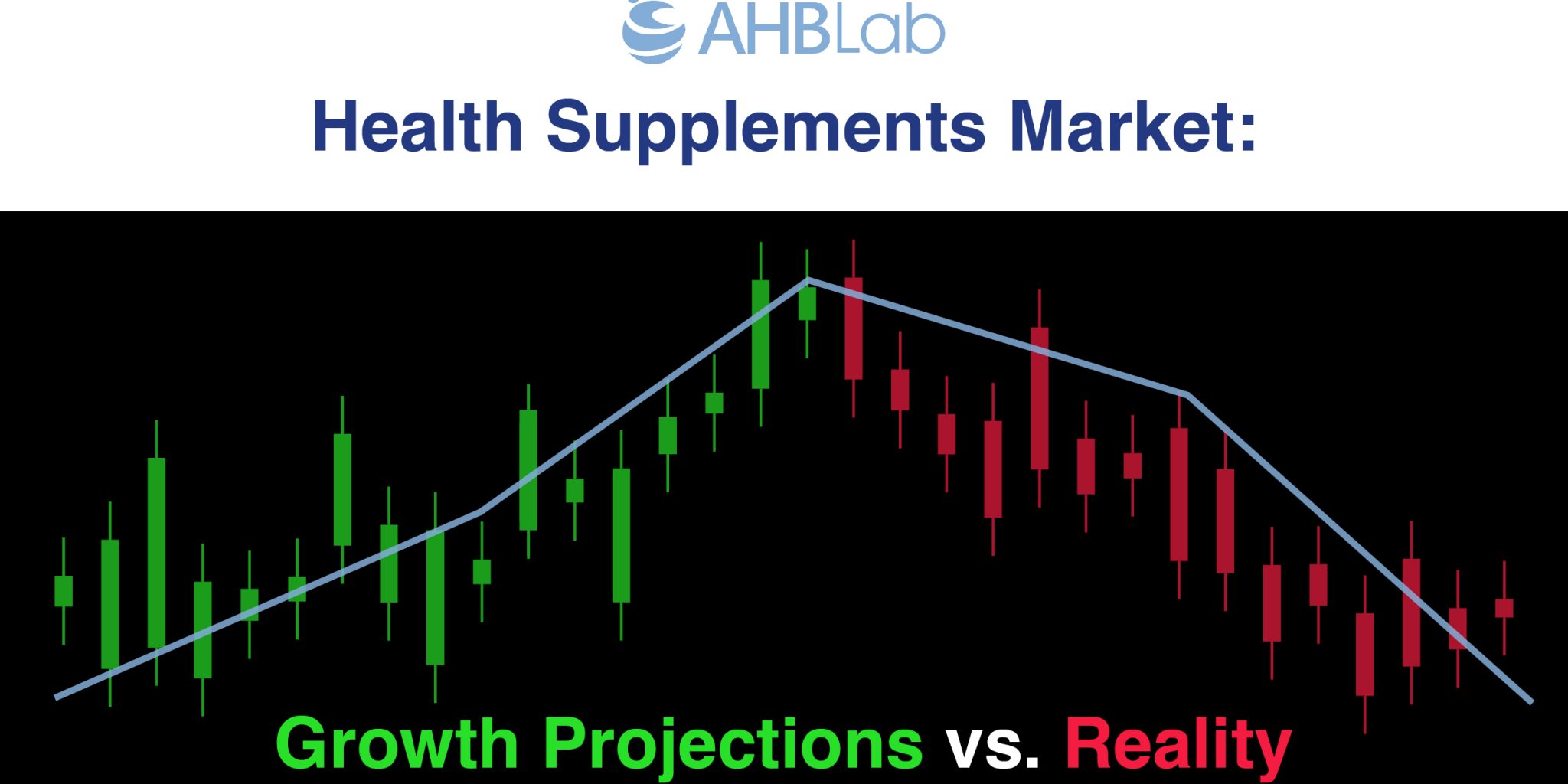
Diverging Perceptions in the Health Supplements Industry
Recent studies project a robust expansion of the global health supplements market, predicting its growth to over US$ 624.7 billion by 2030. However, this optimistic outlook stands in stark contrast to the sentiment prevailing among industry insiders. According to a recent LinkedIn poll, 50% of respondents view the market as weak, while another 25% believe it to be fragile. In face-to-face discussions, industry experts express similar concerns. This dissonance raises a compelling question: why does the ground reality feel so different from the promising statistics?

The Macro Perspective: Factors Fueling the Growth of the Global Health Supplements Market
Several factors contribute to the anticipated expansion of the global nutritional supplements market, as depicted by studies. A growing consciousness about health and wellness, evolving dietary patterns, and an increase in disposable income are factors driving up the demand for nutritional supplements. A sedentary lifestyle adopted by a significant percentage of the global population further fuels this demand, as people turn to supplements to make up for a lack of nutrition in their regular diet.
Additionally, the recent COVID-19 pandemic created an unforeseen boost to the industry, causing a surge in the consumption of nutritional supplements to strengthen immunity. According to the data, the nutritional supplements market is poised for considerable growth.
The Micro View: Real Challenges Confronting the Health Supplements Industry
Contrary to the promising big picture, the actual experiences of businesses operating in the industry paint a different, more troubling image. Companies report a tangible decline in orders from existing clients and express concerns about the reluctance of new companies to venture into product development, citing a challenging economic climate.
Besides, the ripple effects of the pandemic are also taking a toll on the industry. Supply chain disruptions, logistical challenges, and shifting consumer behavior patterns have collectively created a volatile business environment. These factors, coupled with the economic uncertainty and escalating competition, contribute to the perception of a weak and potentially fragile market.
Bridging the Gap: Deciphering the Contradiction Between Statistics and On-Ground Realities
Several factors can explain the striking contrast between data-driven market projections and the experiences of industry insiders. One explanation might be the ‘lag effect,’ where the benefits of the growth trend have not yet trickled down to all businesses.
Alternatively, this discrepancy could be due to market polarization, where a small number of dominant players accrue most growth benefits, leaving the larger pool of smaller players struggling.
Another aspect that needs scrutiny is the methodology employed in collecting and analyzing market data. Broad brushstroke analysis, while useful for understanding general trends, may not accurately reflect the complexities and variations within the market. Differences in regional market conditions, competitive landscape, consumer behaviors, and distribution networks can lead to nuanced market dynamics that aggregate data might overlook, thereby creating a somewhat skewed picture of the industry’s health.

The Way Forward: Strategies to Navigate the Current Market Landscape
Despite these challenges, there are ways for businesses to maneuver through this paradoxical landscape. Companies need to be flexible and responsive, focusing on niche markets that show promise. Digital transformation is another imperative – enhancing online presence, optimizing e-commerce capabilities, and leveraging digital marketing can help businesses tap into the expanding online consumer base.
Investment in research and development is another strategy that could potentially yield dividends like what we did in AHB Lab. By developing innovative products and solutions, companies can differentiate themselves from competitors and cater to emerging consumer demands. Furthermore, partnerships and collaborations can be a smart way to pool resources and expertise, reduce risks, and achieve synergies.

Conclusion: The Market Growth Paradox and its Implications for the Nutritional Supplements Industry
The apparent contradiction between the projected growth of the nutritional supplements market and the challenges experienced by industry insiders offers a paradoxical, yet intriguing insight into the state of the industry. While data forecasts a thriving global industry, businesses on the ground face a contrasting reality.
However, this scenario is not a harbinger of doom for the industry. Instead, it underscores the need for businesses to adapt, innovate, and strategically navigate the current market landscape. Challenging times often serve as a crucible for innovation and resilience. As such, the current state of the market, while undoubtedly challenging, could well be the crucible in which tomorrow’s industry leaders are forged.