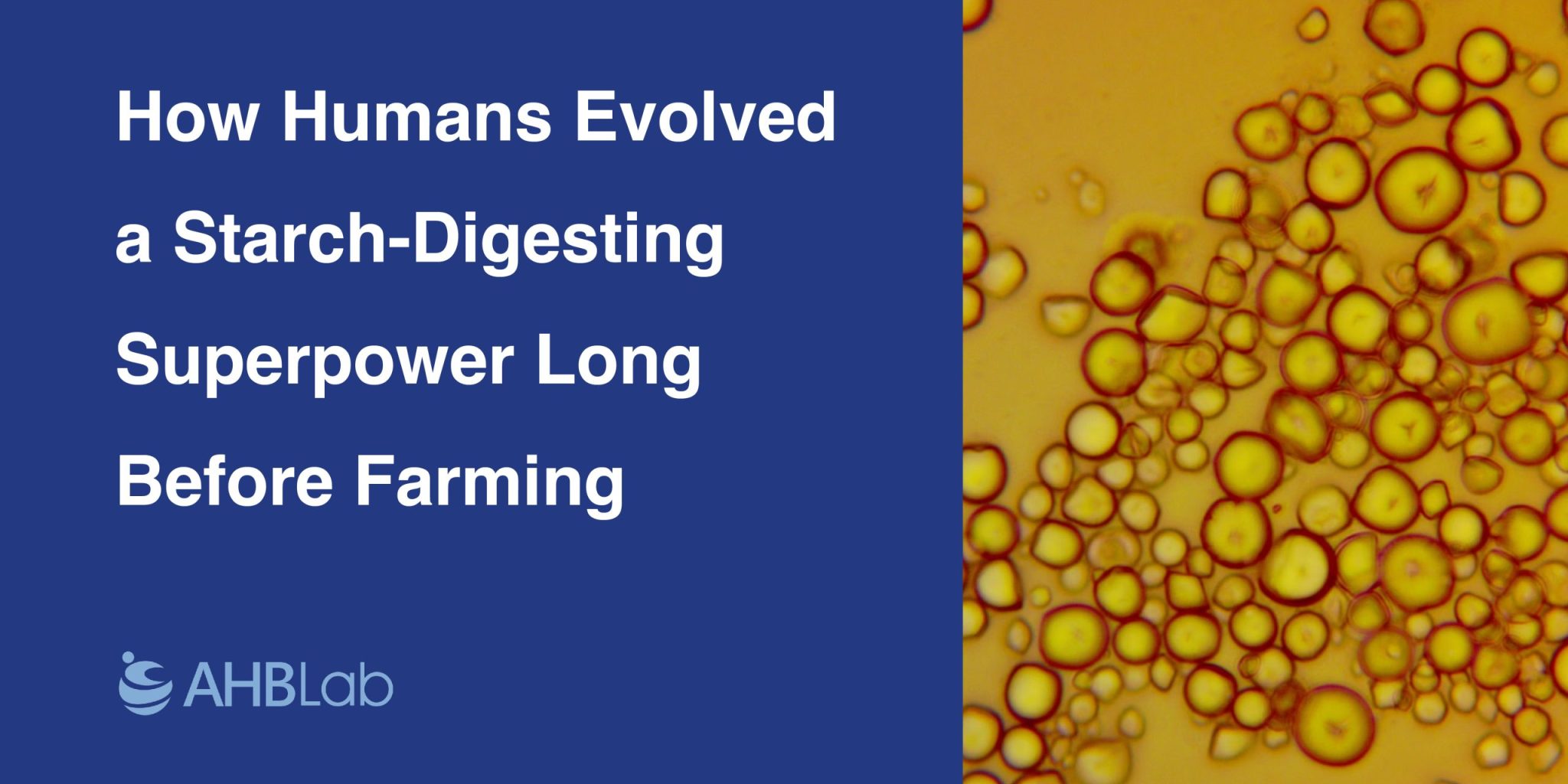
If you’ve ever felt a rush of energy after consuming a thick slice of bread or a roasted yam, you should be thankful for an amazing genetic mutation that occurred in our ancestors hundreds of thousands of years ago. Recent research has uncovered how humans evolved to become better starch digesters and how such an evolutionary trait, as it would turn out, actually predates the birth of agriculture by a long shot.
Indeed, two landmark studies-one in Nature and the other in Science-shed light on how the gene responsible for digestion of starch, AMY1, has evolved. This gene helps in the production of the enzyme amylase, which acts on starch in our mouth and breaks it down to sugars. Investigations not only delve into when this gene first duplicated but also reveal how the rise of agriculture has massively influenced its evolution.
The Starch-Digesting Gene: AMY1
The gene responsible for salivary amylase, AMY1, begins the digestion of starch by producing amylase in the saliva. Modern humans have multiple copies of this gene, and populations with high-starch diets-whether from grains or tubers-tend to have even more copies. This allows them to extract even more energy out of starchy foods; this trait has doubtlessly played a key role in survival within a population.
Until now, however, the origins of this gene duplication, and why AMY1 has become so prone to multiple copies, had remained unresolved. The following recent studies add a great deal to the previous knowledge about the timing of duplication and its genetic mechanism, therefore unraveling the evolutionary journey of starch-digestive capabilities in humans.
The Evolution of AMY1: Conflicting Timelines
While the two studies agree on the general outlines of how AMY1 evolved, they disagree on precisely when the gene first duplicated. Using one of the studies, from Peter Sudmant of the University of California, Berkeley, the gene duplication is pegged at roughly 279,000 years ago, long before agriculture took root. The other, led by Charles Lee from the Jackson Laboratory and Omer Gokcumen from the University at Buffalo, offers an even earlier timeline: perhaps the gene duplicated as long ago as 800,000 years.
That’s a striking difference, yet it does nothing to contradict the central findings: both studies confirm that agriculture’s rise did indeed affect the number of AMY1 copies found in modern-day humans.
Agriculture and the Surge of AMY1
Agriculture, which began around 12,000 years ago, turned wheat, yams, and rice into food staples. As these starch-rich crops became more common, people who carried extra copies of the AMY1 gene were better adapted to digesting starch and absorbing nutrition from them. In essence, the shift toward agricultural diets triggered an explosive proliferation of AMY1 gene copies in successive generations, both teams report.
The Sudmant-led study examined the genomes of 519 ancient Eurasians to go back 12,000 years. The team believed that an average of four to over seven copies of AMY1 per person increased about 5,000 years ago when agriculture spread across Europe and Asia. The increased copy number of AMY1 was a striking example of natural selection for the ability to convert starch into energy more efficiently, which helped early individuals survive and reproduce in agrarian societies.
Neanderthals and Denisovans: Did They Have AMY1 Duplications?
The question for the research was whether human relatives such as Neanderthals and Denisovans also carried multiple copies of the AMY1 gene. As these new studies explain, the answer is complicated.
However, Sudmant’s team found no evidence of duplicated copies of the gene in the genomes of three Neanderthals and one Denisovan. By contrast, the work of Lee and Gokcumen indicates another scenario: duplications of the gene AMY1 in some Neanderthals and Denisovans. This would suggest either that the gene duplications occurred far earlier than previously thought, or that those ancient relatives had acquired the gene copies through interbreeding with modern humans.
Whatever the exact timing, it is clear that AMY1 duplications have been a part of the human genome for a long period and such gene copies most probably played an important role in enabling early humans and their relatives to adapt to different dietary environments.
Why is AMY1 So Prone to Duplication?
One of the big contributions of the new studies is to explain how easily the AMY1 gene duplicates. The work by Lee and Gokcumen shows that once a specific version of the gene-a “three-copy haplotype”-arose, it served as a template for further duplications. Because of the way gene copies were arranged on the chromosomes, a process called crossing over was possible, in which DNA from two copies could mingle and copy itself.
This process explains how some populations came to have considerably more copies of the gene, while others suffered deletions. “The moment we have the three-copy haplotype, it’s the steppingstone for the evolution of this locus-we can either go up by two copies or we can go down by two,” says Charikleia Karageorgiou, a postdoctoral researcher and co-author on the study.
Implications for Evolutionary Biology
The revelation of duplication mechanisms of the AMY1 gene provides a wider understanding of how structural variations in the genome contribute to human evolution. “These findings are very exciting,” says Diyendo Massilani, a geneticist at Yale University, who adds that it could spur further research into how gene copy number variations have driven human adaptation. This research could also yield some clues toward understanding other genetic conditions related to gene copy number, such as Huntington’s disease.
This ability to digest starch more effectively has clearly been a valuable trait for humans over the millennia, helping to fuel the rise of agriculture and to support growing populations. And as researchers continue to unravel the many complexities in our evolutionary history, it would seem genes like AMY1 have played a very important role in shaping who we are today.
Conclusion
The evolution of the AMY1 gene and this starch digestion superpower give an exciting glimpse into the dynamics of human adaptability. With the timeline of duplication of AMY1 still under debate, one thing is for sure: such a genetic trait has played an important role in human survival and dietary evolution. From the first mutations that allowed early humans to digest starch a little better, through the agricultural revolution that multiplied AMY1 gene copies manyfold, this genetic story is one of resilience and adaptation.
As researchers continue to learn more about the subject, we piece together a complex puzzle of just how our ancestors evolved to develop the tools needed for them to thrive on a diet based on starchy foods, a capability that shaped human history.
At AHB Lab, we’re committed to keeping you informed on these crucial developments and their impact on our industry. Stay tuned for more insights as the election progresses!