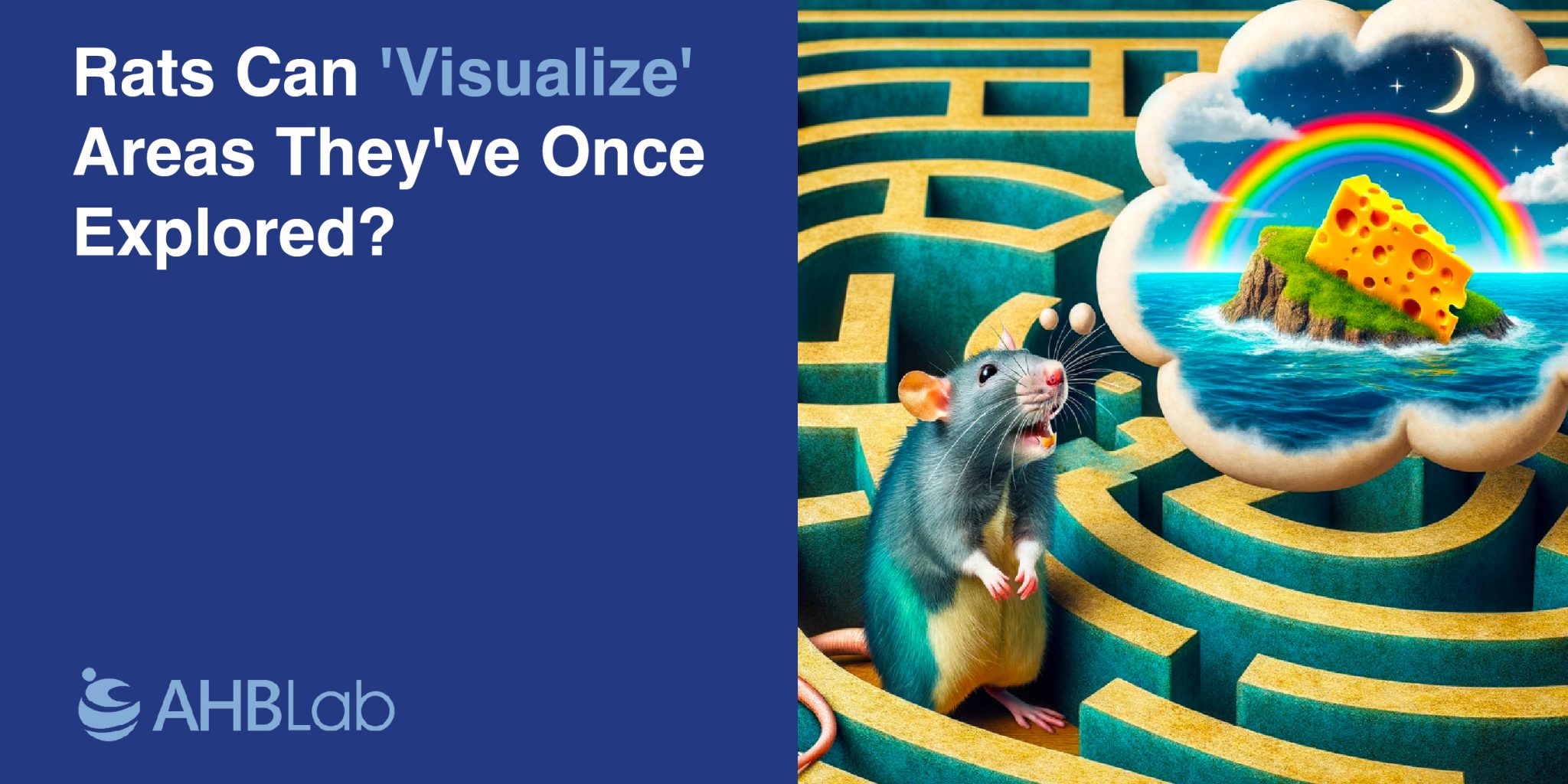
The world of cognitive science has been abuzz with a groundbreaking discovery: rats, much like humans, possess the ability to “imagine” or mentally navigate places they’ve been to before. This revelation not only offers a fresh perspective on the cognitive capabilities of rats but also paves the way for a deeper understanding of mental processes across species.
A Glimpse into the Study
Researchers embarked on a journey to understand the mental capabilities of rats, using a virtual reality setup. Rats were trained to navigate a virtual arena, and their brain activity was closely monitored. The findings were astonishing. Even when stationary, these rats could activate neural patterns identical to those they’d shown while navigating the virtual space. This behavior strongly suggests that rats can voluntarily recall and “revisit” places in their minds.
The Human Connection
Humans have long been known to possess the ability to mentally map and navigate familiar terrains. This skill is evident when we visualize routes, recall landmarks, or plan journeys in our minds. The discovery that rats share a semblance of this ability challenges our understanding of cognition and raises intriguing questions about the evolutionary origins of such skills.
Delving Deeper into the Hippocampus
The hippocampus, a critical brain region associated with memory, plays a central role in this mental navigation process. In humans, as we move through spaces, our hippocampus activates in specific patterns. When we mentally revisit these spaces, the same patterns emerge.
Rats, too, encode spatial data in their hippocampus. The recent study has bridged the gap in our understanding, confirming that rats can, much like humans, access these mental maps voluntarily.
Beyond the Laboratory: Real-world Implications
The implications of this research extend far beyond the confines of the laboratory. By understanding the cognitive processes of rats, we can gain insights into the broader animal kingdom. Are such mental navigation capabilities common among mammals? Or even birds? Such questions beckon further exploration.
Moreover, this research holds promise for human neuroscience. By studying how rats access mental maps, we might uncover clues about human memory, potentially leading to breakthroughs in treating memory-related disorders.
The Road Ahead in Research
The pioneering study on rats has set the stage for a plethora of future investigations. Researchers are now keen to explore other brain regions involved in mental navigation. There’s also an eagerness to understand the depth of these cognitive processes in rats. Can they recall distant places? How detailed are their mental maps?
Furthermore, the innovative use of brain-machine interfaces in the study opens up avenues for technological advancements. Such interfaces could revolutionize treatments for neurological disorders, offering hope to countless individuals.
In Conclusion
The ability of rats to “imagine” places they’ve visited is more than just a fascinating discovery. It’s a testament to the wonders of the brain and the boundless potential of cognitive science. As we continue to probe the depths of the mind, we’re reminded that sometimes, the most profound insights come from the most unassuming sources.
Broader Implications for Behavioral Studies
The discovery of rats’ mental navigation capabilities has significant implications for behavioral studies. Traditionally, mazes and other experimental setups have been designed with the assumption that rats rely solely on immediate sensory input. However, with the newfound knowledge of their ability to mentally navigate, researchers might need to reconsider how they design and interpret behavioral experiments.
Potential Applications in Technology
The use of a brain-machine interface in the study is not just a novel research tool but also hints at the future of neurotechnology. If rats can navigate virtual spaces using only their thoughts, it raises the possibility of developing advanced interfaces for humans. Such technology could be used in rehabilitation, allowing individuals with mobility impairments to interact with virtual environments or even control prosthetic limbs using their thoughts.
Evolutionary Perspectives
The revelation that rats can mentally navigate places also offers intriguing insights from an evolutionary standpoint. If both humans and rats, separated by millions of years of evolution, possess this ability, it suggests that mental navigation might be a fundamental cognitive skill in the animal kingdom. This raises questions about when and why this ability evolved and how widespread it might be among other species.
Challenges and Limitations
While the study offers groundbreaking insights, it’s essential to acknowledge its limitations. The virtual reality setup, though innovative, is a simplified representation of real-world environments. Future studies might need to explore how rats navigate more complex terrains and whether their mental navigation skills are as robust in varied settings.
Additionally, while the study provides evidence of rats’ ability to “imagine” places, understanding the depth and richness of their mental experiences remains a challenge. Do they visualize these places in detail, or is it a more abstract representation?
Final Thoughts
The study on rats’ ability to “imagine” places they’ve previously visited is a monumental step forward in cognitive science. It challenges our understanding of cognition, blurs the lines between human and animal cognitive abilities, and offers a glimpse into the vast potential of the brain.
As researchers continue to delve into this fascinating realm, one thing is clear: the journey of understanding the mind is filled with surprises, and we’re only just scratching the surface.
Rats can ‘imagine’ places they’ve previously visited. A virtual reality study suggests that rodents, like humans, are capable of mental navigation. This insightful research was published on 2 NOV 2023, 3:20 PM ET by Catherine Offord, a renowned science journalist based in Barcelona. Read the full article on Science.org.
As we at AHB Lab continue to pioneer advancements in biosynthetic peptide research and development, we’re constantly inspired by groundbreaking research in related fields. A recent article from Science.org delves into the fascinating ability of rats to mentally ‘revisit’ places they’ve explored, highlighting the complexities and wonders of cognitive science. Such discoveries resonate with our mission at AHB Lab, where we harness cutting-edge technologies like the “Synthetic Biology Peptidomimetic Platform (SBPP)” to push the boundaries of peptide biotechnology. As we chart new territories in peptide science, we value and draw inspiration from parallel innovations in the broader scientific community.